

Jamaica: Bless, Bless
Chapter 26 - In Jamaica’s dry forests and misty mountains, the birds have names that carry ghosts, legends, and the weight of centuries. I had to follow Lyndon to find them.


“If you kill the Chestnut-bellied Cuckoo, it becomes a ghost and will come back and haunt you,” said our guide.
His name was Lyndon Johnson. He was a Jamaican who looked built to be a sprinter, but middle-aged with a little belly. He wore long hiking pants, a T-shirt, and a pair of binoculars that hung from his neck.
I knew the usual cliché’s about Jamaica: laid-back, chill, reggae-soaked, Rastafarian. Ghosts and the supernatural were not at all what I was expecting on a birding trip. I never thought I’d find myself wondering what separates the sacred from the superstitious.
Lyndon’s father named him after US president Lyndon B. Johnson, and he was one of three bird guides in the Blue Mountains National Park where most of Jamaica’s 28 endemic birds are found.
Steve and I were on the Caribbean island to find those endemics. They’re unique to a specific area and help grow your life list. We had six days and 28 new birds to find, and Lyndon was going to help us.
We had landed in Kingston the day before. Jamaica’s capital came at us through the closed windows of our van. My ears caught a dozen rhythms at once: taxi horns, sputtering and choking motorcycle engines, and thumping bass from street corners that I felt in my chest. Laundry fluttered and danced on lines strung across balconies.
It had only taken 15 minutes to get to our hotel, and as we unloaded our bags from the van, jerk spices mingling with wood smoke tickled my nose. Glass doors automatically parted as we entered, and goosebumps rose on my arms and back of my neck from the air conditioning. We nearly ran right into three women playing steel drums, swaying their hips and shoulders, the tinny reverberations filling the space.
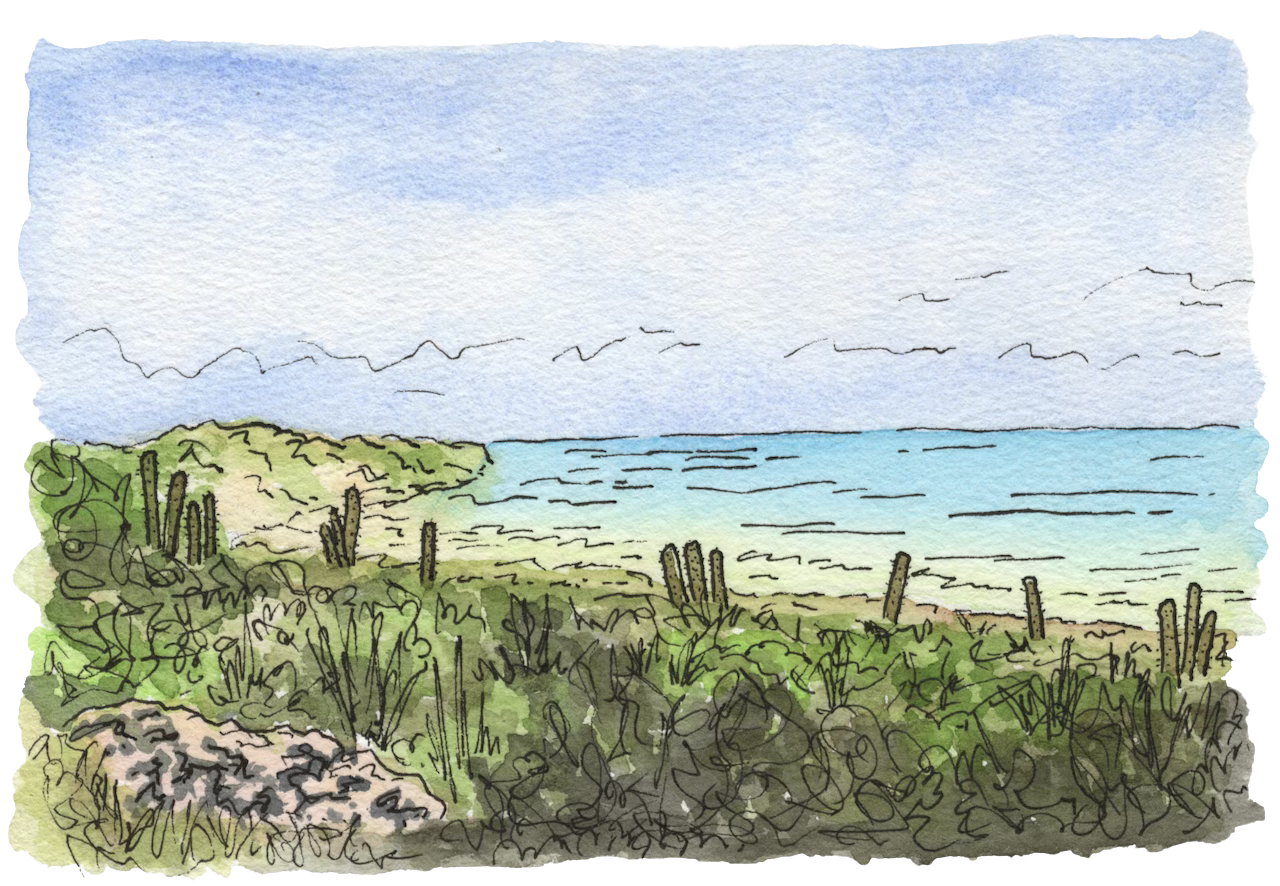
The next morning, we met Lyndon for the first time and headed to Hellshire Hills in the lowlands west of Kingston. Caribbean thornscrub covered this area of the Jamaican dry forest. It was already hot and felt surprisingly arid for the subtropics, and I was grateful my curly hair hadn’t tripled in size from humidity.
The limestone cliffs bore down on the coast. Cactus that reminded me of Arizona’s Saguaro stood erect among the thorny vegetation. Unlike Montego Bay at the other end of the island where tourists spilled out of cruise ships and all-inclusive resorts dotted the coastline, there were no sugar-sand beaches in the dry forest. But we weren’t visiting Jamaica to sunbathe in lounge chairs.
Lyndon grew up in the Blue Mountains, he told me as we walked a packed dirt path that welcomed hikers and birders alike.
“As a kid I killed birds for sport along with my friends,” he told me.
This was surprising information. My immediate reaction was, “That is wrong,” but I let it stay in my head.
As a birder, I had no intention of harming a bird, especially a Chestnut-bellied Cuckoo that might return as a nefarious spirit.
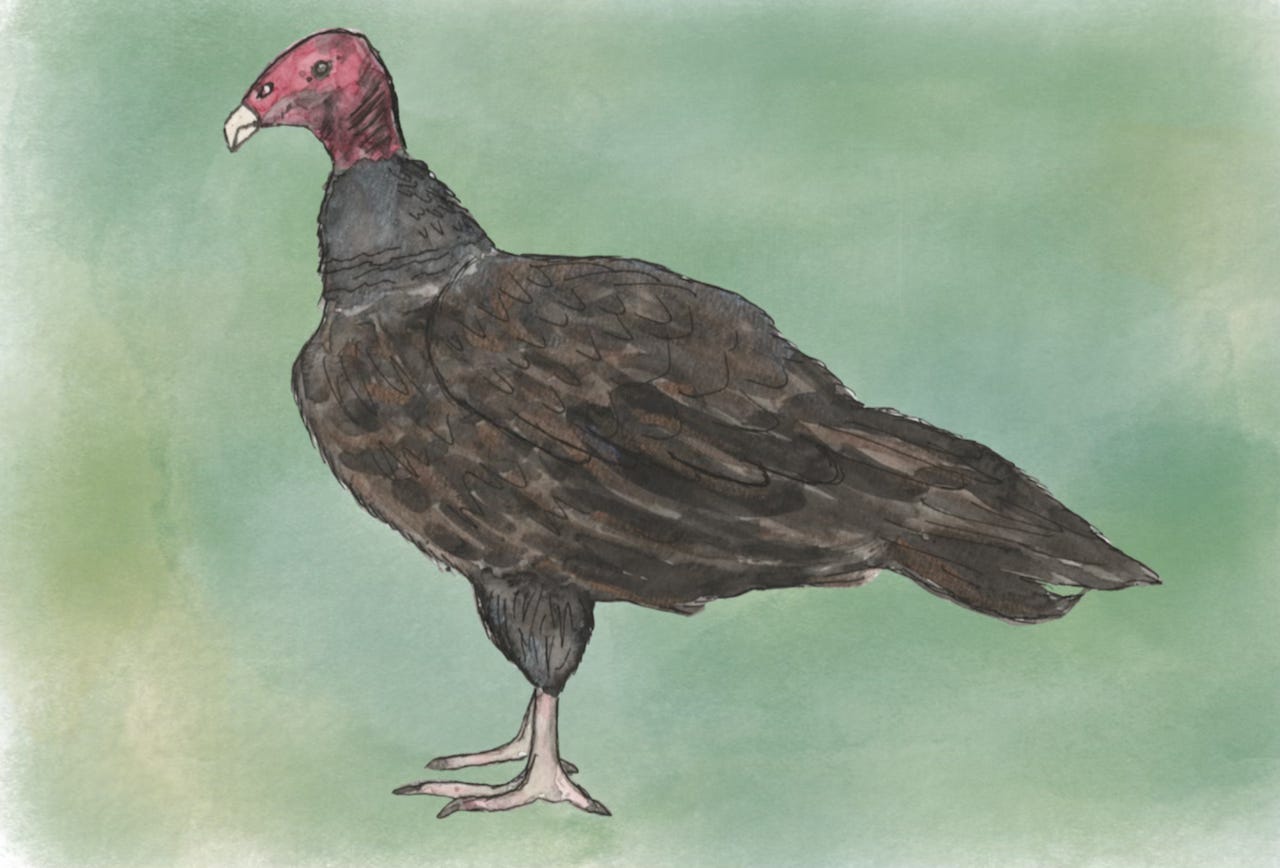
We kept on the path and scanned the area with our binoculars. As we walked, Lyndon pointed to the birds as they came in. A Turkey Vulture soared above us.
“We call it John Crow,” Lyndon said.
The bird, which I’ve seen before throughout North America, has great symbolic importance to Jamaicans. Not to be confused with the American term Jim Crow, related to segregation, John Crow is connected to Obeah, a practice found in Jamaica that includes spellcasting, the supernatural, and magic. It’s believed that if a John Crow roosts on a rooftop, a person inside will die. If it appears in your dream, it signals death or some other terrible event for your family.
Even at home we do this, making birds into messengers from the other side. In North America the bright red Northern Cardinal carries its own folklore: when one appears it brings a message from a loved one who has passed.
Bird mythology has always been closely tied to religion—carriers of news, omens, or spiritual presence. When Europeans reached the Americas and encountered the Northern Cardinal, they saw a creature wearing the color of saints, bishops, and holy imagery.
Growing up, each Sunday I’d pick a dress from my closet and my parents and all five of us kids would pile into our green van and head to church. No one pounded a pulpit about magic, but there was an undercurrent—an unspoken sense that magic and the devil kept close company. My mom wasn’t a fan of Halloween and my sisters and I were steered away from witch costumes. Sorcery and spells didn’t align with sacred beliefs. The further distance between us and the devil, the better, she’d say.
I was twelve when I had a slumber party with my friends from church, and after all the hair braiding and fingernail painting, one of them said in a low whisper, “Look what I have,” as she pulled a Ouija board out of her bag.
Hushed gasps.
“How did she get that?” I thought. Magic was a no-no. Just like “don’t smoke cigarettes,” or “don’t be kissing boys right now.”
In a faith where I believed solidly in life after death and being reunited with loved ones who had passed, trying to connect with them through a mystical game board felt like I was stepping over the guardrails my parents put around me. I didn’t know anyone who had died except my grandparents on my father’s side and they passed away the year I was born so I wouldn’t know what to ask.
All six of us sat in a circle around the board that was placed on the coffee table. Someone read the instructions and we followed her directions as we each placed 2 fingers on the plastic tear-dropped pointer.
“Who should we talk to?” someone asked.
“I’m bored,” said another. “Can’t we do something else?”
“Me too,” said another. “I brought make up! Let’s put some on!”
We all rushed to the bathroom giggling while the Ouija board sat abandoned on the coffee table. And I felt a little saved.
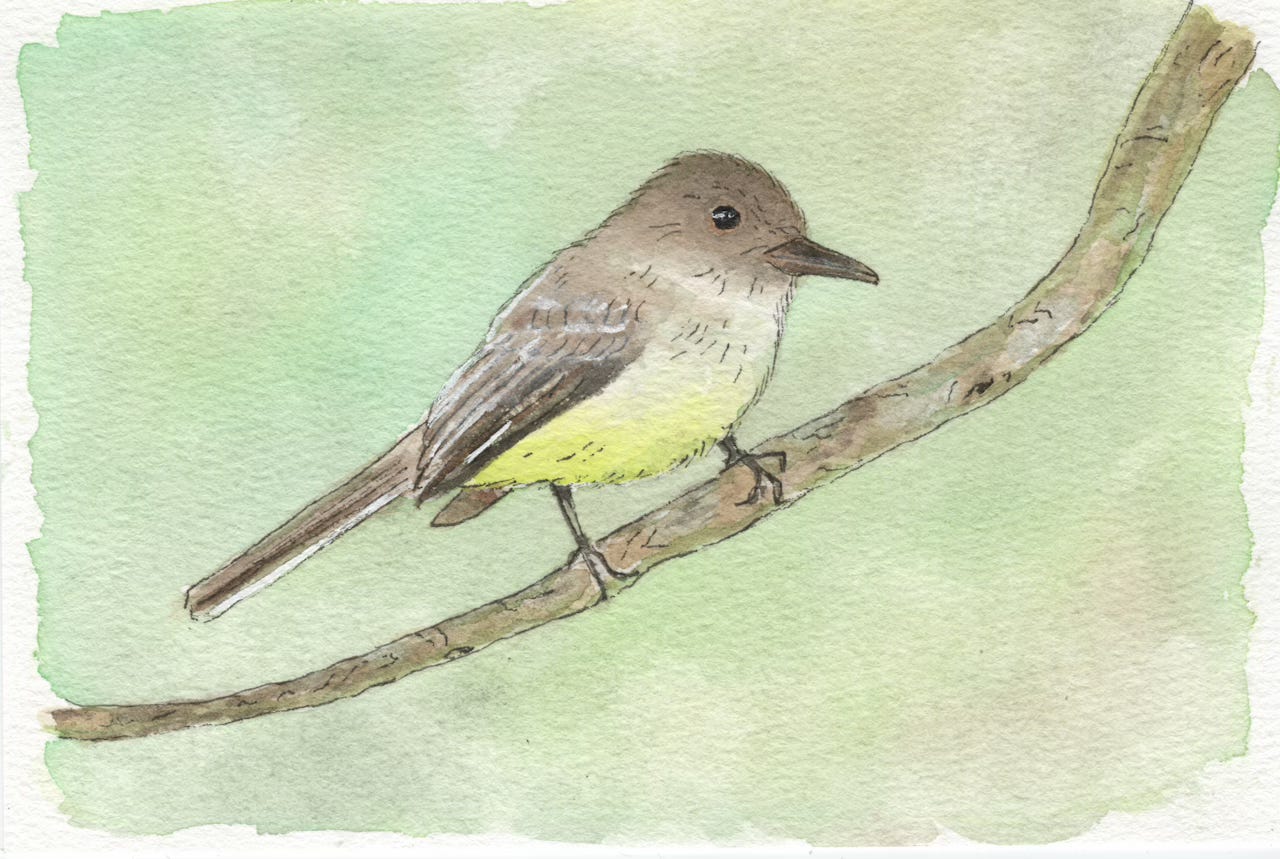
“Stolid Flycatcher!” Lyndon said. He pointed to a gray bird with a white throat and yellow underbelly, perched on a branch at the edge of a cluster of trees.
“This one we call ‘Tom Fool,’” he said. “It perches on low branches, easy for someone to grab. It’s a Tom Fool, like Tomfoolery.” I jotted down both names in my notebook, realizing that birding in Jamaica means you’re keeping track of two names for each bird you find.
Jamaica has always made things its own. Its music, its spices, its spiritual practices — all of it shaped by an island history that took what arrived on its shores, willingly or not, and transformed it into something distinctly Jamaican. The bird names were no different. Not taxonomic, but personal. Almost affectionate. A parallel way of knowing.
There were more species to find, more nicknames to learn. We headed to other birding hot spots in the lowlands where Lyndon parked our van on the side of the road. A man on a rumbling motorbike pulled up next to us.
“Mon, I respect you and your people, but you cannot park here.” He pointed to an area, Lyndon nodded and started up the engine.
The motorbike man smiled and said, “Bless, bless,” and drove off. Lyndon moved the van to the spot the man had pointed to, shaded by lush, leafy trees.
Steve and I walked side by side, following Lyndon. Our eyes darted left, right, and above, searching for movement. Palm leaves fluttered, making a soft, whispery sound like heavy papered wind chimes.
“There!” Lyndon said quietly. His finger pointed to a bird perched low on a branch just a few yards in front of us. “Sad Flycatcher.”
“Why sad?” I asked.
“It sings one note and sounds like it’s wailing. Others say because of its bearded look on its face,” Lyndon said.
“It’s also ‘Little Tom Fool’,” he continued. “Smaller than the Stolid Flycatcher, but just as foolish. It hangs out on easy-to-reach branches for someone to grab or little boys to shoot.”
After a three-hour drive, we arrived at our lodge, 3,500 feet up, where we'd spend the next five days. Early each morning, clouds enveloped the mountains, moving slowly like a vapor as the landscape hid behind it, turning a soft muted green. Our alarm clock was the Loggerhead Kingbird outside our window. Its bold raspy percussive call was on a repeat loop. Steve and I hurriedly dressed and went downstairs to the main dining room where Lyndon greeted us with “Hey, mon,” then folded himself into the chair opposite us at the breakfast table, and outlined our itinerary for the day.
Lyndon had become a ranger for the national park when he was 30, he’d told us. He first assisted with bird surveys, counting and reporting bird species. He had a keen eye for finding and recognizing them, mainly due to killing birds as a boy. “And because I know what they tasted like,” he said with a smile and a tone that I could tell was apologetic.
“You see, we didn’t just kill for fun. We always ate them,” he added. “So, we only targeted birds that ate fruit and seeds because they tasted better.” A silent gasp rang in my head. Then my own quiet hypocrisy landed on me. I’d had chicken for dinner the night before.
“What are our chances of finding the Crested Quail Dove?” Steve asked. It was his main target bird for the trip.
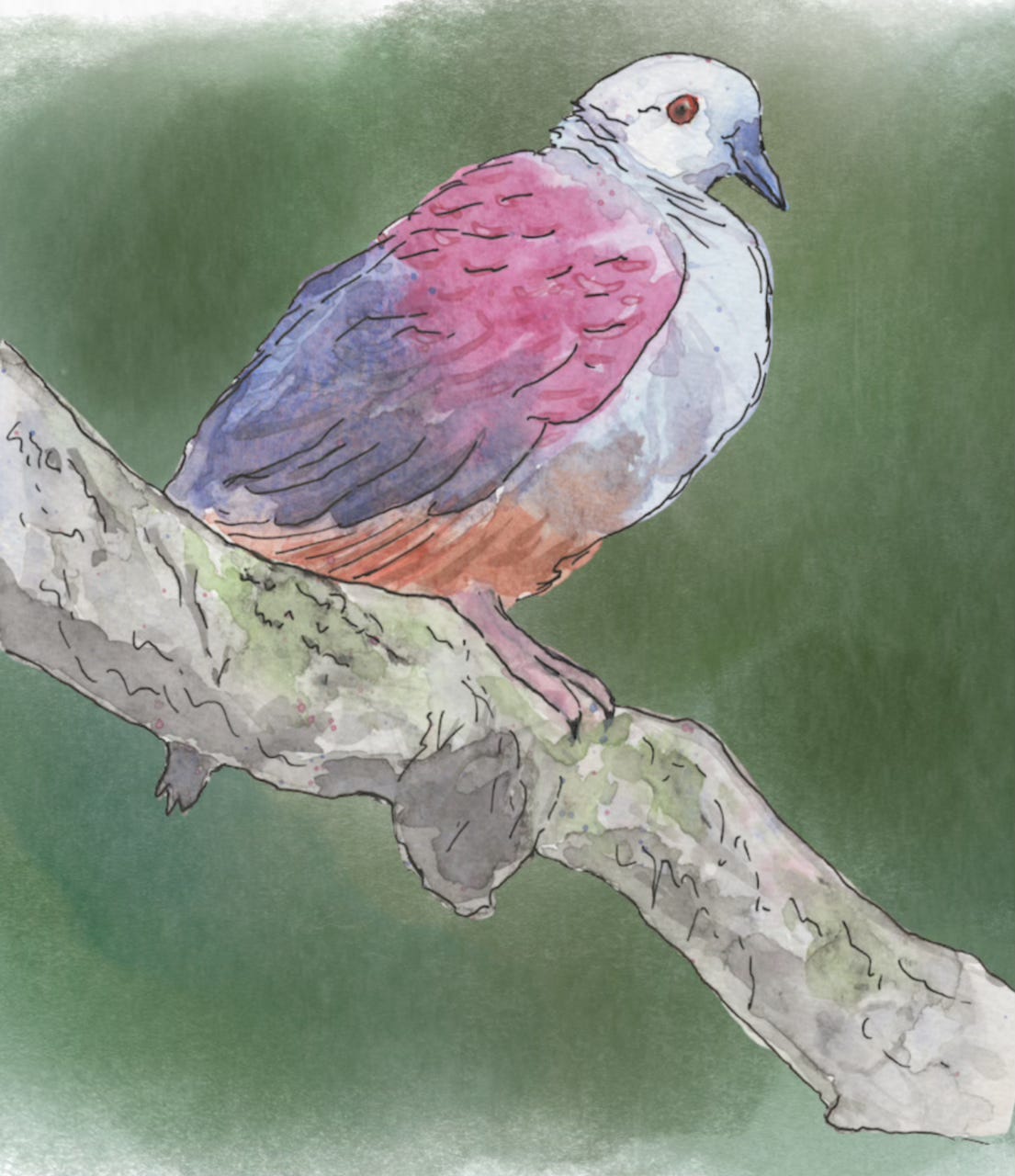
“Ah, the “Mountain Witch,” Lyndon said. “It can be difficult, but we will try. Some say it’s a witch because it coos a haunting song. But it’s really because you hear it and usually don’t see it. That’s why it can be hard to find.”
As we began our hike, dirt smelled dark and damp. It mixed with the faint citrusy brightness from broken stems. I call it the tropical forest cocktail. We moved slowly, intently. Searching for any sign of movement, a shift in color or pattern. Sometimes looking for a bird feels like searching for a lost contact lens. You’re hopeful, but it feels rather impossible.
The quest for a “Mountain Witch” made me think of Halloweens past – always a low key event in our house. My mom preferred bright and cheery holidays like Christmas, Easter, and Thanksgiving over dark and gruesome Halloween. If we wanted to wear a black cape and pointy hat, a princess dress would appear instead. Glenda the Good Witch from Wizard of Oz was the exception. That witch she could get behind.
And here I was in Jamaica looking for a witch.
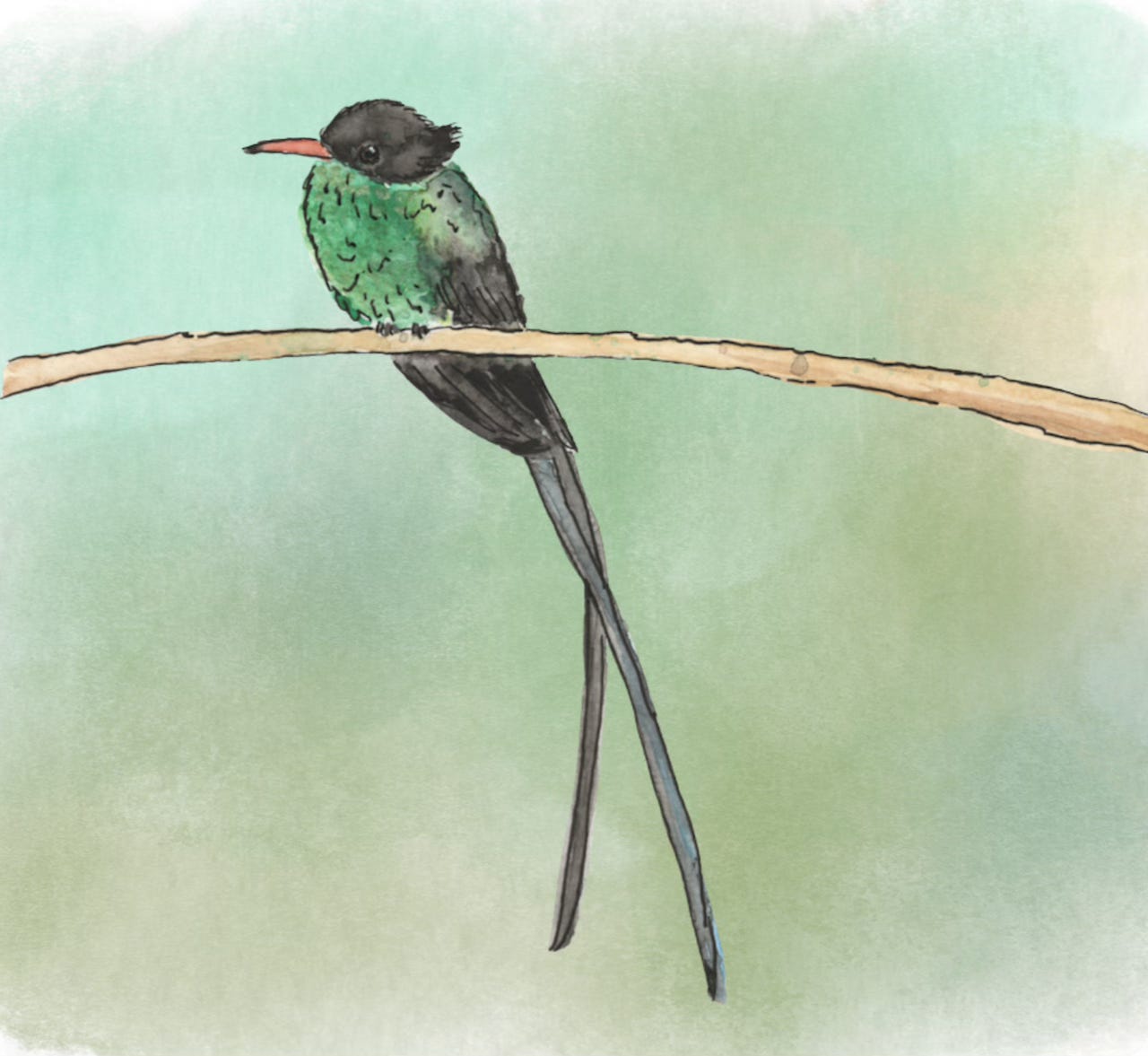
Days were long as we found endemics like the Chestnut-bellied Cuckoo (also called “Old Man Bird” because it sounds phlegmy, as though it’s coughing up something), Jamaican Lizard Bird (“Old Woman Bird” for a similar reason), White-chinned Thrush (“Hopping Dick”—I can’t explain this one); and the Red-billed Streamertail (or “Doctor bird”), a hummingbird with two long, trailing primary feathers about 5-6 inches long.
Depending on whom you ask, the Streamertail, which is also Jamaica’s national bird, got its name because its black tail feather and black crest are reminiscent of a doctor’s coattails and top hat from the 1800s. Others say the tails are like a doctor’s stethoscope.
“Here! Here!” Lyndon said, pointing to a branch. “Tody!”
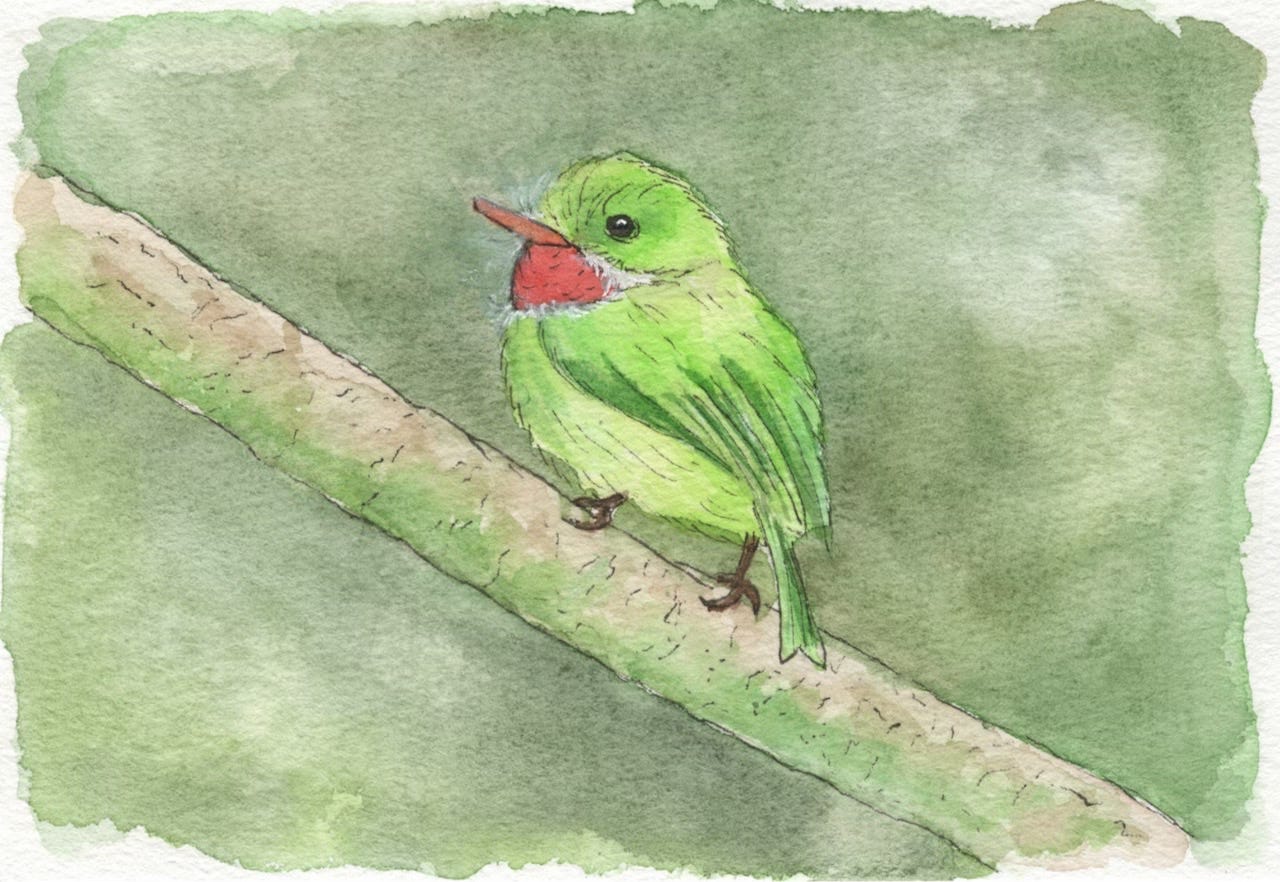
This was my target bird—the one I most wanted to find. The Jamaican Tody, a tiny jewel of a bird with a vivid red throat.
“It’s the Jesus Bird,” Lyndon told me. Legend holds that the red came from drops of blood that fell on it as it looked up at the crucifixion. It’s also called the Rasta Bird, for its red, green, and yellow coloring matching the Rastafarian flag.
As I looked through my binoculars I held my breath and steadied myself by leaning on Steve so I wouldn’t pass out.
“Did you get it?” Steve asked.
“Yes,” I whispered. And we fist-bumped to celebrate our new bird.
One morning we set off early and took a winding road out of the Blue Mountains and drove to the Ecclesdown Road, a legendary birding site on Jamaica’s north coast. Not long after turning on the road we spotted a chatter of Olive-throated Parakeets sitting on the side of the road. Lyndon parked the van and we walked the area, finding Black-billed Parrots, Green-rumped Parrotlets, and Yellow-billed Parrots. A Black-billed Streamertail fed on bright red hibiscus flowers. Except for its bill, it was identical to its cousin the Red-billed Streamertail, and is found only in that northeast part of the country.
Rain suddenly came down hard and Steve and I scrambled back to the van and took cover inside. The percussive plunk of the rain echoed through the van’s shell reminding me of the steel drums I heard upon our arrival.
Then it stopped and I reached for the van door handle and started to open the door when Lyndon’s deep voice said, “No. More rain is coming.”
Then a wall of rain came down like an encore. I didn’t ask how he knew.
As we drove through town, churches stood on almost every block, representing every Protestant sect, the Catholic Church, and Church of England.
“Jamaica has more churches per square mile than any other place in the world,” Lyndon told us. Christianity, Obeah, Rastafarianism, bird ghosts — criminalized, suppressed, adapted, absorbed — not unlike the perfect spice blend for their jerk chicken. The blend has been marinating for centuries.
Back near our lodge in the mountains, enveloped in clouds that dissipated and reappeared within seconds, we had one more day to find the Crested Quail Dove. Lyndon took us to a private road where the montane rainforest arched over it, creating a dark shaded area. The doves liked to forage in the shadows, he said, generally avoiding direct sunlight. After about an hour of searching Lyndon spotted the purple and lavender quail-dove perched on a branch. Silent. Still. The mysterious Mountain Witch looked right at us.
Lyndon told us that just as he had begun his career as a ranger conducting surveys, Crested Quail Dove numbers had been plummeting. The introduction of the mongoose on the island, habitat destruction and, of course, killing birds contributed to its decline. “When I realized this,” he said, “I figured I needed to take myself out of the equation.”
With education and fewer people shooting birds for sport, the dove is recovering.
“Do children still shoot birds for sport?” I asked.
“No, they have their heads like this,” and he pretended to have a phone in his hand and looked down at it.
An unintended benefit of smart phone addiction is saving the birds in Jamaica.
I thought about that on the drive back down the mountain.
I wouldn’t have found any of this on a beach lounger in Montego Bay—the folk wisdom, the bird ghosts, the blend that’s been melding over time. I had to follow Lyndon.
I’d arrived on an island thinking I was the observer. I wasn’t. I’d brought my own belief system with me. My own sense of what was sacred and what wasn’t. But Jamaica kept showing me its own version at every turn. In the end I understood: the sacred is intrinsically tied to place.


I love the local nomenclature! Another beautiful story, Lisa, and absolutely lovely paintings. I saw the Dominican Republic's endemic Broad-billed Tody a couple of years ago and it shook my world. Those colors seemed impossible.